What you'll learn
- Why the latest care plan needs to reach the right people
- How plans, parent sign-off and medication records stay together
- What trip leaders need alongside consent and payment
- How allergies and dietary needs reach the kitchen
- What Ofsted looks at beyond whether a care plan exists
The challenge isn't simply recording that information. It's making sure the right person can access the right information at the moment it's needed.
Supporting a pupil with SEND rarely sits neatly in one place. A care plan might live with the school office, dietary requirements with the kitchen, medication information with trained staff and additional support arrangements with the person organising a school trip.
For schools, that means thinking beyond the care plan itself and looking at how a pupil's individual needs follow them throughout the school day.
One plan, seen by the right people
Individual healthcare plans help schools set out what support a pupil needs, when it is required and who is responsible for providing it.
But even the best plan has limited value if the latest version isn't readily available.
For pupils with SEND, the practical picture can include:
- An individual healthcare plan
- Regular or named medication
- Allergies and dietary requirements
- Additional support on trips or activities
- Specific collection or transport arrangements
Keeping that information connected helps staff work from the same picture, while making it easier to keep parents involved when plans change.
Care plans and medication go hand in hand
For pupils with medical conditions, schools may need to manage much more than the document itself.
Plans change. Medication expires. Doses are given. Parents need to know what has happened.
The Department for Education's statutory guidance on supporting pupils with medical conditions says individual healthcare plans should make clear what needs to be done, when and by whom, and should be reviewed at least annually or earlier where a child's needs change.
A useful approach is to keep three things connected:
- The current plan, so staff aren't relying on an outdated copy.
- Parent sign-off, so there is a clear record of the agreed plan.
- Medication records, so doses and important medication information stay with the pupil's care record.
With iAntz Pupil Care, schools can bring these elements together, with healthcare plans, parent sign-off and medication records connected around the pupil.
SEND doesn't stop at the school gate
A school trip can introduce a completely different set of considerations for a pupil with SEND.
Alongside the usual consent and payment, staff may need to know whether a pupil requires 1:1 support, whether medication needs to travel with them, and whether there are additional care requirements.
When those details are separated across a consent form, payment list and care-plan folder, staff have to piece the picture together themselves.
Keeping care requirements alongside the practical trip information gives trip leaders a clearer picture before pupils leave school.
Find out more about school trips and consent.
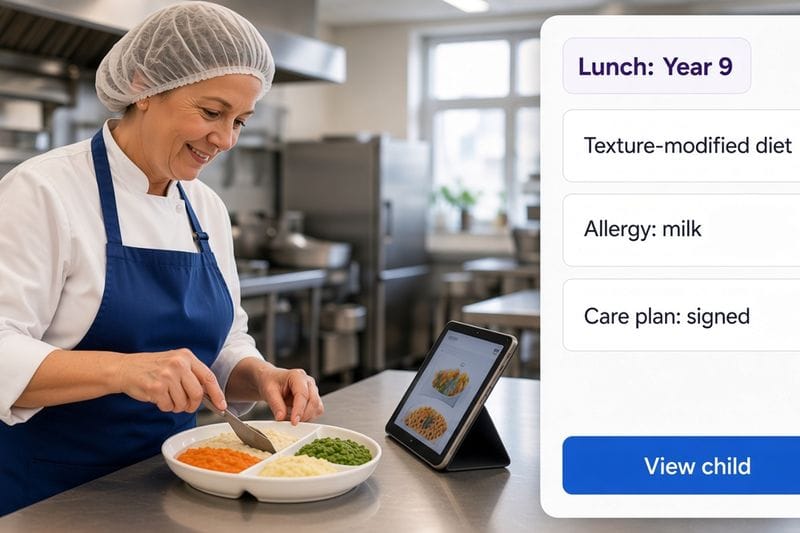
Individual needs follow pupils to the dining hall too
For pupils with allergies or special dietary requirements, information also needs to reach the kitchen.
That can include allergies, specific dietary requirements and texture-modified diets. Like care information, these details need to remain current and accessible rather than depending on separate lists or conversations between teams.
Explore meal management to see how dietary information can follow the pupil through school meal ordering.
What does Ofsted look at?
SEND isn't considered in isolation from the rest of school life.
The Ofsted school inspection toolkit covers areas including safeguarding, inclusion, personal development and wellbeing, and pupils' individual needs.
For schools supporting pupils with SEND, the practical question is therefore much broader than:
Do we have a care plan?
It's whether individual needs are understood and supported as pupils move through school life.
That might mean having the right medical information available, involving parents, supporting access to trips and activities, or making sure dietary requirements reach the people preparing food.
The important point isn't creating more paperwork. It's making the information you already hold easier for the right people to access when they need it.
Read the Ofsted school inspection toolkit and operating guides for the full guidance.
Questions worth asking your school software provider
When looking at how technology can support pupils with SEND, don't just look at the feature list. Think about how information will actually move around the school.
Ask:
- Can important pupil information follow them across meals, clubs and trips?
- Can parents review and sign an individual healthcare plan digitally?
- Can staff record medication and keep parents informed when a dose is given?
- Do allergies and special dietary requirements reach the kitchen alongside meal choices?
- Can trip organisers see relevant care requirements alongside consent and payment information?
- Can staff easily see which information is current?
- Is the parent experience designed with accessibility in mind?
- Are WCAG 2.2 AA principles respected?
One pupil. One connected picture.
Ultimately, supporting pupils with SEND isn't about putting more information into more systems.
It's about making sure the information a school already holds can follow the pupil through their day, from care and medication to meals, clubs and trips.
That's where connected school technology can make a real difference: less time piecing information together, and a clearer picture for the staff and parents supporting each pupil.
See how iAntz supports special schools and pupils with SEND.


