What you'll learn
- Why prevention beats chasing debt later
- How visibility of balances helps the office
- Why clear communication with parents matters
- How to support families before a write-off
School debt management: stop writing off unpaid school payments
Managing school payments has become increasingly challenging for many schools.
Whether it's meals, trips, clubs or wraparound care, school teams often spend significant time monitoring balances, sending reminders and following up on outstanding payments.
The challenge is that by the time a debt appears on a report, a considerable amount of administration has often already taken place.
Effective debt management isn't simply about recovering outstanding balances. It's about spotting issues earlier and reducing the likelihood of debt building up in the first place.
Prevention is better than recovery
Many schools dedicate valuable time to managing debt once it has already accumulated.
Phone calls are made, emails are sent and administrative teams spend hours reviewing balances and updating records.
While these activities are important, the most effective approach is often preventing issues from escalating in the first place.
When schools have clear visibility of outstanding balances and access to tools that support timely communication, they can address concerns earlier and reduce the administrative effort required later.
Visibility makes a difference
One of the biggest challenges for schools is simply knowing where they stand.
Payments, meal balances, clubs and trips can sometimes sit across different systems, making it difficult to gain a complete picture of what is owed and by whom.
Bringing this information together gives school teams greater visibility and helps them prioritise action where it is needed. School meals, clubs and trips can sit on the same child, so the balance is not a scavenger hunt.
Rather than spending time gathering information, staff can focus on supporting families and managing exceptions more effectively.
Communication matters
Most unpaid balances are not the result of families deliberately avoiding payment.
Often, reminders are missed, information is overlooked or circumstances change unexpectedly.
Simple, timely communication can make a significant difference.
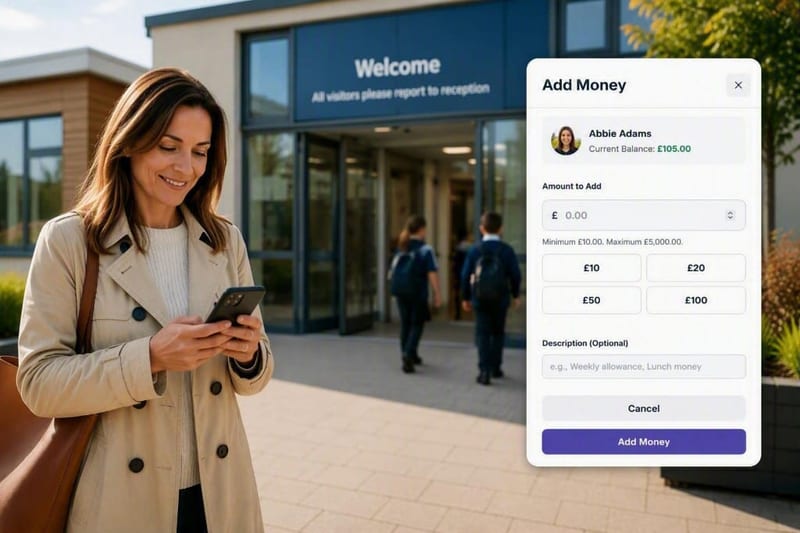
Providing parents with clear information, easy access to balances and straightforward payment options helps remove barriers and encourages quicker action without creating additional work for school staff.
The easier it is for parents to understand what is due and how to pay, the easier it becomes for schools to manage outstanding balances.
Reducing administrative pressure
Debt management can place a considerable burden on office teams.
Manual reports, spreadsheets, reminder emails and payment tracking all take time, particularly in busy school environments where staff are already managing multiple responsibilities.
Simplifying these processes allows schools to spend less time on administration and more time supporting pupils, parents and the wider school community.
The goal is not simply collecting payments more efficiently. It's reducing the workload associated with managing them.
Supporting families along the way
Every school understands that family circumstances can change.
A successful approach to debt management balances financial responsibility with empathy and understanding.
By giving schools better visibility and helping parents stay informed, conversations can happen earlier and support can be provided before situations become more difficult to manage.
This creates a better experience for schools and families alike.
A simpler way to manage school payments
Effective debt management is rarely about what happens when a balance becomes overdue.
It's about having the right information, clear communication and simple processes in place from the start.
When schools can easily monitor balances, communicate with families and manage payments from one place, they reduce administration, improve visibility and create better outcomes for everyone involved.
At iAntz, we believe school technology should simplify everyday tasks. By bringing together payments, meals, clubs, trips and parent engagement in one platform, schools gain greater visibility while reducing the administrative effort often associated with managing outstanding balances.
Because the best debt management strategy is often preventing debt from becoming a problem in the first place. Book a demo.


